Things to Do in Suzhou
One city, one thousand canals, one thousand gardens, and one perfect bowl of noodles.
Top Things to Do in Suzhou
Find activities and tours you'll actually want to do. Book through our partners -- no booking fees.


Plan Your Trip
Essential guides for timing and budgeting
Climate Guide
Best times to visit based on weather and events
View guide →Day Trips
The best excursions and nearby destinations worth the journey
Explore day trips →Where to Stay
Best neighbourhoods, hotel picks, and booking tips
Find hotels →Travel Insurance
What's required, what coverage matters, and how to get a quote
Read guide →What to Pack
Climate-specific gear, essentials, and what to leave at home
See packing list →When Should You Visit Suzhou?
Tap a month for weather, crowds, and highlights
View full year-round climate guide →Explore Suzhou
Jinji Lake
Landmark
Lingering Garden Liu Yuan
Landmark
Suzhou Museum
Landmark
The Humble Administrators Garden
Landmark
Tiger Hill Huqiu
Landmark
Gusu District
District
Pingjiang Historic District
District
Shantang Street Area
District
Suzhou Industrial Park Sip
District
Tongli Ancient Town
District
Your Guide to Suzhou
About Suzhou
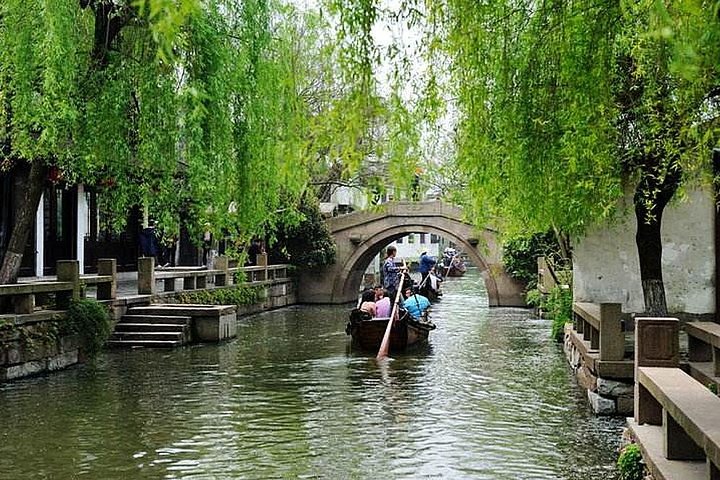
The first thing you notice in Suzhou is the silence, or the way sound travels differently. The clack of mahjong tiles from a courtyard walled in white. The soft lapping of a wooden boat pole against a canal's green stone edge. The distant hum of a high-speed train heading to Shanghai eighteen minutes away. This tension defines Suzhou.
A city that perfected the classical Chinese garden, a world of scholar's rocks, moon gates, and koi ponds at the Humble Administrator's Garden, while also building the sleek, geometric skyline of Jinji Lake in Suzhou Industrial Park. You can spend a morning tracing the willow-lined canals of Pingjiang Road. A bowl of Suzhou's signature sweet-and-savory noodles with braised pork costs about 25 yuan (around $3.50).
Then spend an afternoon in a minimalist café overlooking a man-made lagoon. The trade-off is that the old town's charm is no secret. The main gardens can feel like a slow-moving queue of selfie sticks by mid-morning. The fix is to visit Tiger Hill's leaning pagoda at opening, when the mist still hangs over the mossy stones.
Lose yourself in the quieter lanes off Shantang Street after dark, when the red lanterns glow and the tourist groups have boarded their buses back to Shanghai. You come to Suzhou to understand the Chinese ideal of balance. Between water and stone, noise and quiet, the ancient and the relentlessly new. And to eat noodles so good they justify the trip alone.
Travel Tips
Transportation: Suzhou's transit system is clean, efficient, and divided between the old and new cities. The metro is your best friend for reaching the gardens, Jinji Lake, and the train stations. A single trip starts at 2 yuan (less than 30 cents). Taxis are surprisingly affordable for short hops. Insist the driver uses the meter. The ride from Suzhou Railway Station to the Humble Administrator's Garden should run about 15 yuan (around $2), not the 50 they might quote. For the authentic Suzhou experience, skip the packaged canal tours. Take the public water bus that runs along the Grand Canal. Locals use it to commute to the market. It costs just a few yuan. The one pitfall: rush hour on the metro lines connecting to Shanghai is a genuine contact sport.
Money: Cash is still king in Suzhou's old-town markets and at smaller food stalls. WeChat Pay and Alipay are ubiquitous everywhere else. You'll need a local SIM card or a working international data plan to use these digital wallets. Most vendors no longer accept foreign credit cards. A solid mid-range dinner of Suzhou specialties like squirrel-shaped mandarin fish or biluochun tea-infused shrimp will run 150-200 yuan per person (roughly $20-$28). Visit the local wet markets like the one near Fengqiao. You can sample a dozen different street snacks for the price of one sit-down meal. Avoid changing money at the airport or train station. Rates are poor. Withdraw local currency from ATMs inside major bank branches instead.
Cultural Respect: Suzhou's gardens are not parks. They are considered works of living art and philosophy. Speak softly. Don't climb on the rockeries. Let the elderly visitors, who often come to practice tai chi or admire a specific scholar's rock, have the prime viewing spots first. When taking tea, which is a serious ritual here, accept the cup with both hands as a sign of respect. At temples like the North Temple Pagoda, modest dress is expected (cover shoulders and knees). The biggest potential offense is treating the gardens as a mere photo backdrop. Instead, try to sit for ten minutes in a pavilion and observe how the light changes on the water. That's the point. Locals appreciate visitors who make the effort. A simple "xiexie" (thank you) goes a long way.
Food Safety: Suzhou's culinary reputation is built on subtlety and freshness, not fiery heat. The rule here is to follow the locals. If there's a queue at a noodle shop like Songhelou on Guanqian Street, it's a good sign. The city's signature dishes, like the red-braised pork belly known as hongshao rou or the delicate xiefen tangbao (crab roe soup dumplings), are served piping hot and are generally very safe. Be cautious with cold dishes or pre-cut fruit from street vendors. For the adventurous, the 'hairy crab' season in autumn is a must-try. Ensure it's from a reputable restaurant. Tap water is not for drinking. Even locals boil it. Carry bottled water. The local biluochun green tea, served scalding hot, is the traditional and safest beverage.
When to Visit
Suzhou's weather swings from damp-chill to steam-bath humidity. Your tolerance for each defines the best time to visit. Spring (April to May) is the consensus favorite. Temperatures are a gentle 15-25°C (59-77°F). The gardens erupt in wisteria and peonies. This is also peak season. Hotel prices in the old town can be 50% higher.
The famous gardens feel less like contemplative retreats and more like crowded pavilions. Autumn (September to November) is a close second. Crisp air (10-20°C / 50-68°F) and the well-known golden ginkgo trees line Pingjiang Road. This is hairy crab season. Every mid-range restaurant becomes a destination. Summer (June-August)is punishingly hot (30-35°C / 86-95°F) and humid.
Frequent afternoon thunderstorms. The upside? Gardens are quieter. Hotel rates plummet by about a third. Winter (December-February) is cold (0-8°C / 32-46°F), damp, and often grey. You'll have the classical gardens nearly to yourself. Seeing the Humble Administrator's Garden under a dusting of snow is a rare, memorable sight.
For families, spring and autumn are obvious. For budget travelers or photographers willing to brave the cold, winter has a stark, beautiful Suzhou few ever see.
More Ways to Experience Suzhou
Tours, day trips, and local experiences curated by on-the-ground operators.
Didn't see anything interesting yet?
Browse Viator's full catalog of tours, day trips, food experiences, and private guides in Suzhou.
See All Suzhou Tours on Viator